Wednesday, April 13, 2011
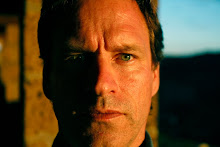
A conversation with Gary Snyder. And the last post.
My new website is about to go up officially, and with it comes my new blog, Sightlines, which will focus on my photography, with links to any articles or photos I get published. Signing off on a high note, here is my conversation with Gary Snyder, from the Minneapolis Star Tribune. You can find the new blog here.

Tuesday, April 5, 2011
Profundity, in 17 syllables
A 13-year-old, the daughter of a friend of a friend, wrote this haiku for her class.
Haikus are easy,
but sometimes they don't make sense.
Refrigerator.
Haikus are easy,
but sometimes they don't make sense.
Refrigerator.
Monday, April 4, 2011

Sunday, April 3, 2011


 More from the Traveler's Eye Photo Workshop in Maiden Rock. Read on for the rest of the nine images I chose from my work to be in our self-published book of photos from the weekend. It's amazing how something that would have seemed impossible a few years ago (publishing a book of photos) can be done in about an hour now.
Seen in Maiden Rock


 Traveler's Eye Workshops, the mobile photography school run by me and Richard Sennott spent the last weekend in the Wisconsin town of Maiden Rock, on the Mississippi River about 75 miles south of Minneapolis. We shot abstracts each morning at sunrise, did some impromptu portraits, and also spent an afternoon photographing a potter at work. Here you'll find part of the Maiden Rock sign in the train yard, color coding painted on a rail, a baker in Stockholm, one of my students at work, and potter Diane Millner at her wheel. The class is self-publishing a selected cut of the photos we took on the weekend; we each get nine images. Mine include the horse in the post below, and the shots in the post above.
Wednesday, March 30, 2011
Blogophobia

I heard a few weeks back that the blog is dead. I believe there's good reason to believe that notion. Blogs are generally too long-winded, unpredictable in quality and usually poorly thought out. Or not thought out. It's a blog after all. My current web site, chriswelsch.com, is under renovation by nancy entwistle (nancyentwistle.com), who, by the way, I recommend if you need a site. In any case, the new site will have a blog built in, and I'll use it mainly for photos and links to my other work. Richard Sennott and I just wrapped up a weekend workshop in Maiden Rock, Wis., which included a morning spent with therapy horses. Apache here was a nipper and a pusher, and kind of wild-eyed. Good for making you stand your ground.
Monday, May 3, 2010
Morel a la Magritte

The French bureaucracy foiled my depature for Paris, but I made the most of the unexpected delay. I took the train to Milwaukee and caught a ride with my commuting friend John Woerthenheimer back toward Minneapolis. We met his partner Jim Buchta at their farm in Wisconsin, and spend two days hunting morels. As symbols of the heart-crushing ephemera of spring, the Japanese have cherry blossoms; Midwesterners have these most succulent mushrooms. We found dozens sprouting through the leaves at the roots of dead elms, and ate them fried in butter and ladled over broasted halibut.
Subscribe to:
Posts (Atom)